

Anyone interested in rock and pop music has probably come across the term or the myth of the “Club 27.” The myth is based on the mysterious—and often tragic—fact that many prominent and popular musicians in pop, rock, and blues history died at the age of 27.
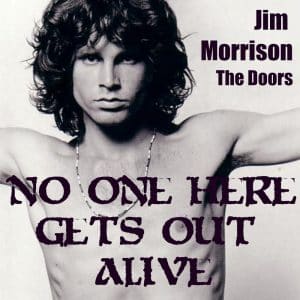
The foundation of the myth can be traced back to the early 1970s, when within just two years, four immensely popular rock icons—Jimi Hendrix, Janis Joplin, Jim Morrison of The Doors, and Brian Jones, co-founder of The Rolling Stones—passed away. Over the decades, the myth has become a firmly established part of our popular culture and has been reignited time and again by the early deaths of musicians and other pop culture figures, such as Kurt Cobain (1994) and Amy Winehouse (2011).

In addition to the most famous members of the “Club 27,” the list also includes musicians such as: Robert Johnson – King of the Delta Blues, Alexandra – German chanson and pop singer, Alan “Blind Owl” Wilson – Canned Heat, Leslie Harvey – Stone The Crows and brother of Alex Harvey, Ron “Pigpen” McKernan – Grateful Dead, Dave Alexander – The Stooges, Pete Ham – Badfinger, Gary Thain – Uriah Heep, Helmut Köllen – Triumvirat, Jacob Miller – Inner Circle, Pete de Freitas – Echo and the Bunnymen, Kristen Pfaff – Hole, Richey Edwards – The Manic Street Preachers, and many more.
The myth of the “Club 27” has also been the subject of scientific research, primarily to gain insights into possible underlying risk factors. As is often the case with myths, they cannot really be explained rationally. What is certain, however, is that the fame of musicians associated with the “Club 27” tends to increase massively after their death.